
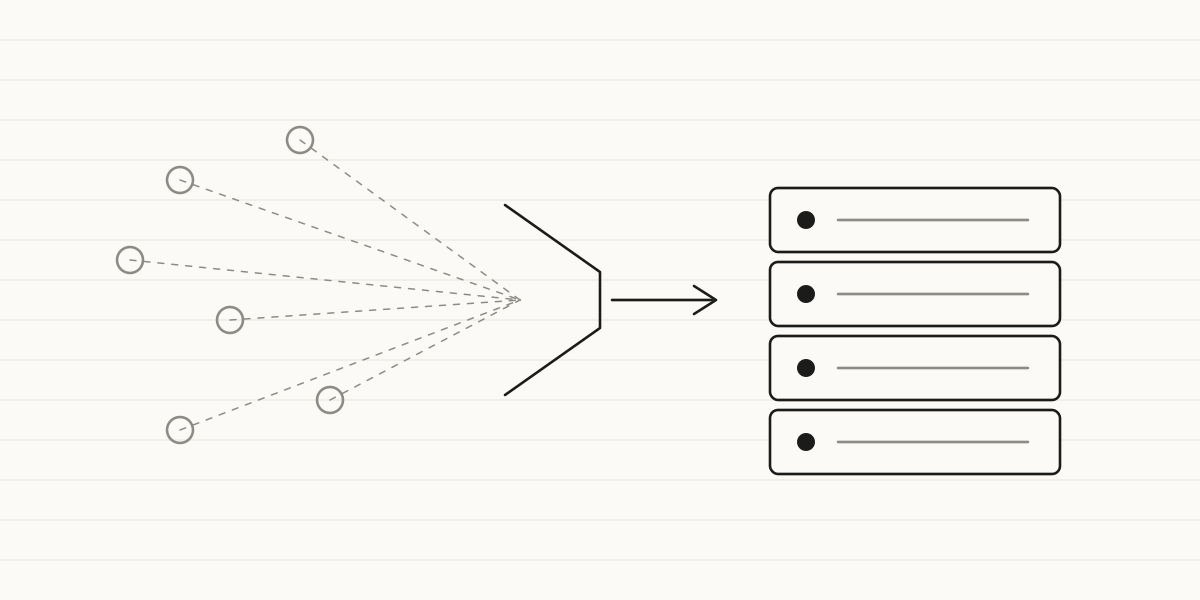
A small restaurant makes its money in a few hours a day. And a good chunk of that money slips away through a place that shows up on no income statement: the phone that rings at peak service and nobody can pick up.
The 9:30 p.m. missed call that was a table for six, and that table has gone to dine somewhere else. The Instagram message asking whether you're open on Sunday, answered on Tuesday. The Saturday booking that never shows and that nobody confirmed. The customer who left delighted and never wrote the review that would have brought you three more tables. The one who had a great dinner and hasn't come back, simply because they forgot you exist.
None of this is cooking. All of it is done today by whoever can, whenever they can, between plates — which is why half of it falls through. Five processes, in order of difficulty.
1. Capturing every reservation, whatever channel it comes through
The pain: reservations come in by phone, WhatsApp, Instagram and the website, at all hours and almost always at peak service, when the floor is packed and nobody can drop what they're doing to pick up the phone. A missed call at 9:30 p.m. can be a table for six that ends up dining across the street. A Saturday message you reply to on Monday is a booking that no longer exists.
What gets automated: a system that handles and captures reservations across every channel at once, instantly and at any hour. It collects the details (day, time, party size, allergies, whether a high chair is needed), checks real availability, confirms the table and blocks it in your booking book — without anyone on the team having to stop service. And the call you can't pick up stops being a lost reservation: whoever won't wait for the tone gets an instant message to book without calling.
What changes: you stop losing tables because you couldn't answer. In a business where a full Friday is what pays the month, this is the automation that moves the most revenue. Difficulty: low-medium.
2. Confirming the table and cutting no-shows
The pain: the phantom booking. The table for four on a Saturday at 9 p.m. reserved by someone who doesn't show and doesn't call. That table could have been sold twice that night, and it sits empty in your best hour. It's exactly the empty chair in clinics, but in your most expensive time band.
What gets automated: an automatic WhatsApp reminder a few hours ahead asking for one-tap confirmation. If the customer confirms, great. If they say they can't after all, the table frees up with time to give it to someone else — or to someone on that night's waiting list. If they don't reply, you know which bookings are up in the air before service starts, instead of finding out with the table empty.
What changes: phantom bookings drop immediately and measurably. It's the automation with the fastest, most obvious return in the sector. Difficulty: low.
3. Getting Google reviews at the right moment
The pain: when someone searches "where to eat near me", they choose by the stars and the photos on Google. You have customers who left delighted and would have given you five stars without a second thought — but only if you ask, and only if you ask at the right moment. On a busy floor, asking by hand table by table, it doesn't happen.
What gets automated: an automatic message a while after the visit, while the memory of the dinner is still fresh, with a direct link to leave the review in one tap.
What changes: you go from getting reviews by chance to getting them consistently. And reviews are, literally, what decides whether the person walking past comes into your place or the one across the street. Difficulty: low.
4. Bringing the customer back
The pain: most people who dine well at your restaurant don't come back. Not because they didn't enjoy it, but because they forgot you exist. A customer who returns once a month is worth far more than one who came once, but keeping that bond by hand, with a full floor, is done by no one.
What gets automated: low-effort communication with your customers — a note when your seasonal menu launches, an invitation for a special date, a "we haven't seen you in a while" with a real reason to come back. All automatic, in your restaurant's tone and brand, built from the customers who have already booked with you at some point.
What changes: a customer base that today cools off and forgets you becomes tables that come back. It's money you had already earned once and were letting walk away. Difficulty: medium.
5. Answering the same questions as always
The pain: "Are you open on Sundays?" "Do you have gluten-free options?" "Is there parking nearby?" "Do you do group menus?" "Do you have a terrace?" The same ten questions, by phone, by WhatsApp and by Instagram, all day long, and each one interrupts someone who was setting a table or plating up.
What gets automated: an assistant on your website, WhatsApp or Instagram that resolves the repetitive questions with your real information (your hours, your menu, your allergens, whether you have a terrace or where to park) and, as soon as a query is a reservation or something with nuance, collects it or hands it to a person.
What changes: the team stops living interrupted and can be on the floor, which is where the experience is won. And whoever asks at 11 p.m. whether you're open tomorrow gets an answer right away. Difficulty: medium.
Where to start (and one rule)
Not all five. One. And in a restaurant, number 1 — capturing every reservation — is usually the right answer to start: it attacks the biggest leak head-on, which is the tables that go elsewhere because you couldn't pick up the phone at peak service.
The rule: measure tables, not messages. The goal isn't to send more automations — it's to fill more tables and lose fewer. Before starting, get a sense of how many reservations come in, how many calls are missed and how many no-shows you have each week: that's the number that will tell you whether it worked.
How many tables slip away from you each week between missed calls and bookings that never show? Book a call with us and get all these improvements running within weeks. Fewer empty tables in your best hours, more customers coming back, and a team that can focus on the floor — not the phone.